
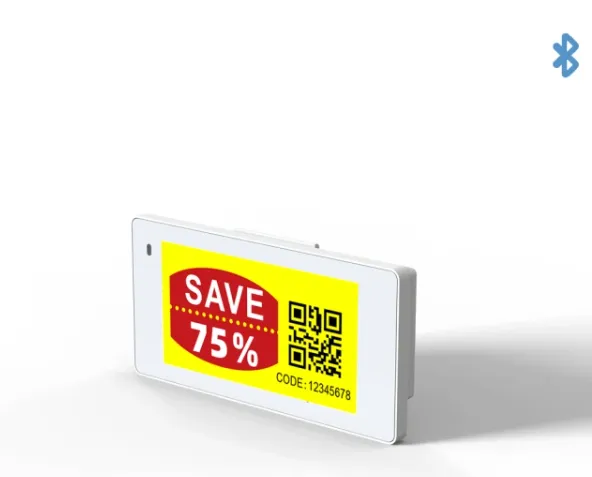
Dynamic pricing means changing a product’s price according to a defined business rule, schedule or promotion. In a physical store, the shelf label is only one part of that process: the retailer also needs an approved price source, a rule or schedule, and a way to keep the shelf display and checkout data aligned.
An electronic shelf label can receive and display information through its supported system workflow. The label does not create pricing rules or guarantee that an update reaches every device. Confirm functions, integration and exception handling for the selected project.
Which Pricing Workflows Should You Evaluate?
| Workflow | Questions to confirm |
|---|---|
| Scheduled promotion | Can the selected software schedule a start and end time? Which system is authoritative for the price? |
| Markdown | Who approves the markdown, and how are affected products and labels identified? |
| Inventory-related change | Is inventory data available to the pricing system, and is an integration included? |
| Multi-store change | How are store-specific prices, permissions and exceptions handled? |
These are evaluation scenarios. Do not assume a capability is included just because an ESL is present; verify it in the selected software and integration scope.
Confirm the Label Update Workflow
- Identify the approved price source and who can change or authorize records.
- Map product and label identifiers and define how errors or missing records are handled.
- Confirm the compatible label model and update path.
- Test the chosen workflow with representative labels and data.
- Compare shelf and checkout prices and record update results and exceptions.
Tocvue’s basic BLE workflow uses a compatible phone app and does not require an access point. SLIM 2.4 GHz labels use a compatible CEDAR V3 AP and centralized architecture. Ask Tocvue to confirm available software, integration and project scope for your requirements.
Measure Outcomes With Store Data
Before a pilot, record a baseline for the current process. Useful measures include staff time spent preparing and replacing labels, time needed to verify price changes, the frequency of shelf-to-checkout discrepancies, promotional execution steps and any integration work.
Compare the same measures during a representative evaluation. Results depend on store layout, model, data quality, software, approvals and staff procedures; do not assume a fixed update time, labor saving or sales lift.
Questions to Resolve Before Purchase
- Which exact label models and communication workflow are proposed?
- What software or phone-app access is included?
- Which POS, ERP, inventory or pricing integrations are in scope?
- How are failed updates, overrides and audit records handled?
- What are the quoted deployment, training, support and maintenance terms?
- Can the key workflow be demonstrated with representative data and labels?
This guide describes evaluation questions, not guaranteed product functions or business results. Confirm the selected model and commercial scope in current written project documents.
Planning an ESL Evaluation?
Share your workflow, store scope and data requirements to discuss available ESL models and project quotation terms.
Request Project Quote