
Retail theft is often talked about in terms of simple numbers — a lost unit here, a missing item there. But the real cost is far more nuanced, and most retailers underestimate how much their display strategy contributes to the problem (or the solution).
The Real Price of Shrinkage
According to the National Retail Federation's annual security survey, the retail industry loses over $100 billion globally to shrinkage each year. But that top-line number hides several layers of cost that go well beyond the wholesale value of stolen goods:
- **Lost margin**: Every stolen unit represents 100% lost profit on that item
- **Replacement logistics**: Restocking, shipping, and labor to replace stolen demo units
- **Customer experience downgrade**: Locking items behind glass or in cages reduces touch-and-feel engagement, which directly impacts conversion
- **Staff distraction**: Employees spending time monitoring displays instead of serving customers
- **Damage to demo units**: Forced removal often breaks charging cables, stands, or the devices themselves
The Display Paradox
Here's the challenge every electronics retailer faces:
Customers need to touch devices to buy them. But the more accessible a device is, the easier it is to steal.
This is the core tension. A phone in a glass case is perfectly secure but generates fewer sales. A phone on an open table drives engagement but invites theft.
The solution isn't choosing between security and accessibility — it's choosing the right display strategy.
Why Display Strategy is a Business Decision, Not Just a Security One
Many retailers treat display security as an afterthought — something the operations team handles. But the data tells a different story:
Stores that optimized their display strategy saw:
- 15-30% reduction in demo unit theft
- Higher conversion rates on open-display items
- Reduced staff time spent on security monitoring
- Better customer satisfaction scores related to product accessibility
Key Factors in Building Your Display Strategy
1. Risk Tiering by Product Value
Not every product needs the same level of security. A practical framework:
| Tier | Product Value | Display Type | Example |
|---|---|---|---|
| Low | Under $100 | Open shelf | Accessories, cables |
| Medium | $100-$500 | Alarmed single stand | Mid-range phones, headphones |
| High | $500+ | High-security alarm + cable lock | Flagship phones, tablets, laptops |
2. Device Density and Store Layout
The number of devices per square meter matters. Overcrowded displays create blind spots. Well-spaced, individually alarmed displays create natural deterrence.
Retailers using centralized multi-port security controllers can manage 4-8 devices from a single unit, reducing clutter while maintaining individual protection for each device.
3. Visual Deterrence
Visible security measures — alarm stands, retractable cables, clearly displayed security features — act as a deterrent before theft is even attempted. The goal is to make your display look protected without making it look like a fortress.
Practical Recommendations
For most electronics retailers, a tiered approach works best:
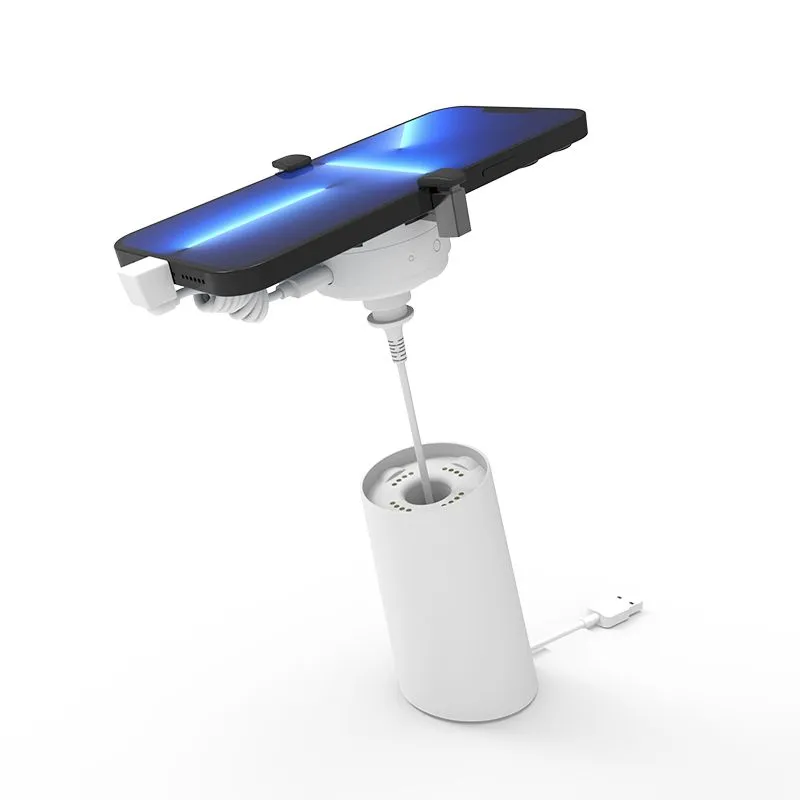
- **High-traffic flagship products**: Use alarm-enabled display stands with retractable cables and remote disarm. This secures the device without impeding customer interaction.
- **Secondary products**: Standard alarm stands with wired connections are cost-effective and reliable for medium-value items.
- **Bulk / low-value items**: Simple mechanical security (pull boxes, security hooks) provides baseline protection without over-investing in alarm systems.
The Bottom Line
Retail theft is not going away. But the most successful retailers treat display security as a strategic investment rather than an operational cost. The right display strategy reduces shrinkage, improves customer experience, and directly impacts the bottom line.
About the author: This article was contributed by a retail security specialist with experience serving retail buyers in global markets. For more information on retail security display solutions, visit tocvue.com.
Need a Retail Security Solution?
Get a free consultation and custom recommendation for your store. Factory-direct pricing, global shipping.
Request Free Assessment