
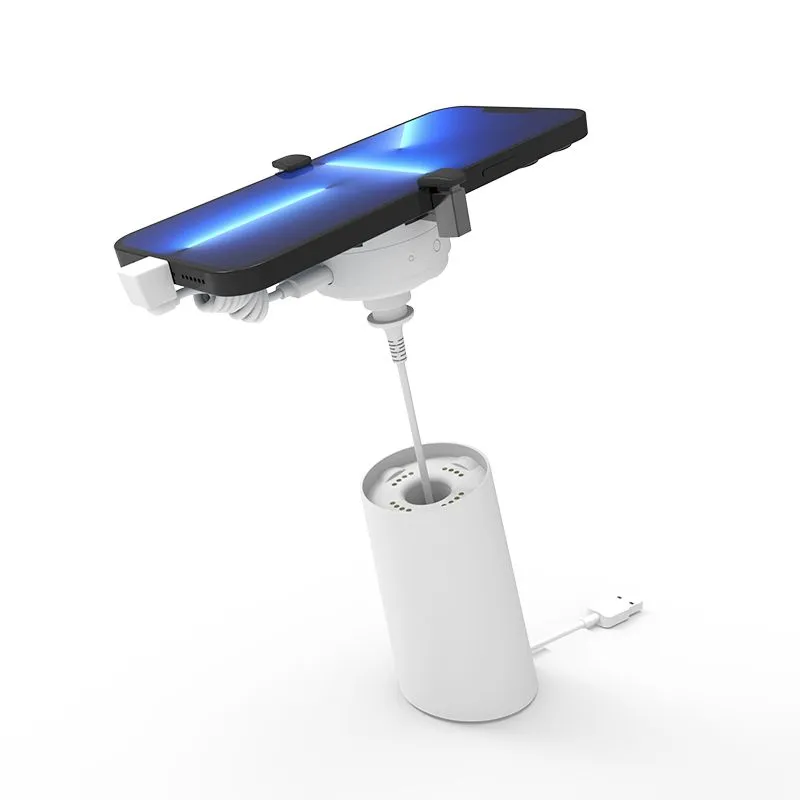
If you're sourcing anti-theft display stands for your retail operation, you'll quickly notice a wide gap in pricing. A branded US/EU security stand might cost $50-100, while a factory-direct unit from China can cost $10-30.
The gap is real. But the question is: What are you actually getting (or giving up) at each price point?
This article provides an honest, balanced comparison to help you make the right sourcing decision for your specific needs.
The Price Breakdown
Where the Price Difference Comes From
Branded (US/EU) pricing includes:
- R&D and design costs amortized over smaller volumes
- Sales and marketing overhead (field reps, trade shows, advertising)
- Distribution and warehousing (regional stock, fast shipping)
- Customer support infrastructure (phone, email, on-site)
- Certification and compliance costs for each market
- Brand premium and warranty reserves
Factory Direct (China) pricing includes:
- Manufacturing cost + margin (thin, typically 10-20%)
- Raw materials and component sourcing
- Basic quality control
- Export documentation
Illustrative Cost Comparison
Figures below are examples only and are not current market quotes. Obtain current written offers for the exact products, quantities, routes and service scope before comparing.
For an anti-theft display stand with alarm, compare the same configuration and quantity:
| Cost Component | Branded (US/EU) | Factory Direct (China) |
|---|---|---|
| Unit price | Confirm in a current written offer | Confirm in a current written offer |
| Shipping | Confirm by route and destination | Confirm by route and destination |
| Customs and duties | Confirm by destination | Confirm by destination |
| Support/warranty | Confirm for the selected offer | Confirm for the selected offer |
Compare current written quotations for the same configuration, quantity, shipping route, destination duties, support scope and warranty terms. Do not assume one sourcing route is always less expensive.
Quality: The Honest Truth
Compare suppliers using current evidence
Supplier capabilities and service models differ. Evaluate the actual products and commercial terms under consideration rather than relying on broad assumptions about origin or brand.
The Current Reality
Supplier capabilities vary. Evaluate the current supplier and the exact offer using model-specific evidence:
| Factor | What to compare | Evidence to request |
|---|---|---|
| Materials and construction | Materials and finish for the selected model | Current specification and sample, where available |
| Quality controls | Inspection steps and acceptance criteria | Written quality plan or inspection records |
| Product documentation | Model and destination-market scope | Documents from the issuer or responsible supplier |
| MOQ and lead time | Exact quantity and production schedule | Current written quotation |
| Communication and support | Contact process, response expectations and after-sales scope | Written service terms |
| Customization | Available options and any development work | Model-specific feasibility and cost confirmation |
The Key Variable: Supplier Vetting
The difference between a good factory-direct experience and a bad one comes down to supplier selection. Compare the exact model, documentation, quality checks, support scope and written commercial terms. Cost depends on configuration, order size, logistics, destination charges and service requirements.
When to Choose Branded
Branded solutions from companies like InVue, Se-Kure, and MTI are still the better choice when:
1. You Need Turnkey Simplicity
Branded solutions come with complete support: one phone number for orders, installation help, troubleshooting, and replacements. There's no time zone difference, no language barrier, no customs paperwork.
Best for: Single-store operators, retailers without import experience
2. You Need Low MOQ / Fast Delivery
Availability, minimum order quantity, production schedule and delivery time vary by supplier, model, customization and destination. Request the current schedule for the exact requirement.
Best for: Urgent needs, test/pilot deployments, stores with very few display points
3. Compliance Is Complex
If your market has specific compliance requirements (UL listing in the US, or proprietary safety standards), branded suppliers have already handled this. Factory-direct suppliers may not have the same certifications.
Best for: Regulated markets, government contracts, insurance-required certifications
When to Choose Factory Direct
Factory direct makes more sense when:
1. You are comparing a multi-point deployment
For a multi-store project, compare total landed cost and service scope across equivalent configurations:
| Cost component | Branded offer | Factory-direct offer |
|---|---|---|
| Hardware and configuration | Use current written quotation | Use current written quotation |
| Shipping and destination charges | Confirm by route and destination | Confirm by route and destination |
| Installation, support and warranty | Compare documented scope | Compare documented scope |
Best for: Chains, multi-store operators, volume buyers
2. You Need Customization
Branded suppliers offer set products. Factory-direct manufacturers can:
- Match your brand colors
- Add your logo to stands
- Customize cable lengths and clamp sizes
- Develop unique packaging
- Create entirely new form factors
Best for: Brands that want consistent visual identity across their stores
3. You Have Import Experience
If your team already imports goods from China (as many retail chains do), adding security display stands to your next container is straightforward.
Best for: Companies with existing China supply chain operations
The Hybrid Approach That Works Best
For most retailers, we recommend a phased hybrid strategy:
Phase 1: Start with Branded (or Samples)
Buy 5-10 units from a branded supplier to:
- Test the product in your environment
- Learn what features matter for your store
- Train your team on basic usage
Phase 2: Source Samples from 2-3 China Factories
Use the knowledge from Phase 1 to evaluate factory-direct options:
- Ask whether a sample is available and confirm its price, shipping cost and schedule.
- Compare build quality, alarm volume, cable durability
- Test for 2-4 weeks before committing
Phase 3: Place a Trial Order
Start with 50-100 units from your preferred factory-direct supplier. This is small enough that risk is limited but large enough to assess consistency, packaging quality, and logistical reliability.
Phase 4: Scale Based on Real Experience
If the trial order meets your standards, scale to full deployment. Keep the branded supplier as a backup for urgent needs.
Due Diligence Checklist
When evaluating factory-direct suppliers:
- [ ] Request model-specific conformity documents and verify their scope with the issuer
- [ ] Ask for a factory video tour or arrange a visit
- [ ] Request customer references (preferably in your market)
- [ ] Clarify warranty terms and claim process
- [ ] Test sample units for 30+ days
- [ ] Verify packaging quality for international shipping
- [ ] Confirm payment milestones for the exact order in the written quotation
- [ ] Check communication responsiveness (time zone matters)
- [ ] Review their product catalog breadth and update frequency
The Bottom Line
Factory direct isn't automatically better than branded, and vice versa. The right choice depends on your scale, capabilities, and risk tolerance.
The smartest approach: use branded for initial learning and urgent needs; transition to factory direct for scale deployments. Compare current written quotations for equivalent configurations, total landed cost, product documentation and service scope before selecting a sourcing route.
About the author: This comparison is based on observations from working with retail buyers in global markets on their security display sourcing strategies.
Need a Retail Security Solution?
Get a free consultation and custom recommendation for your store. Factory-direct pricing, global shipping.
Request Free Assessment