
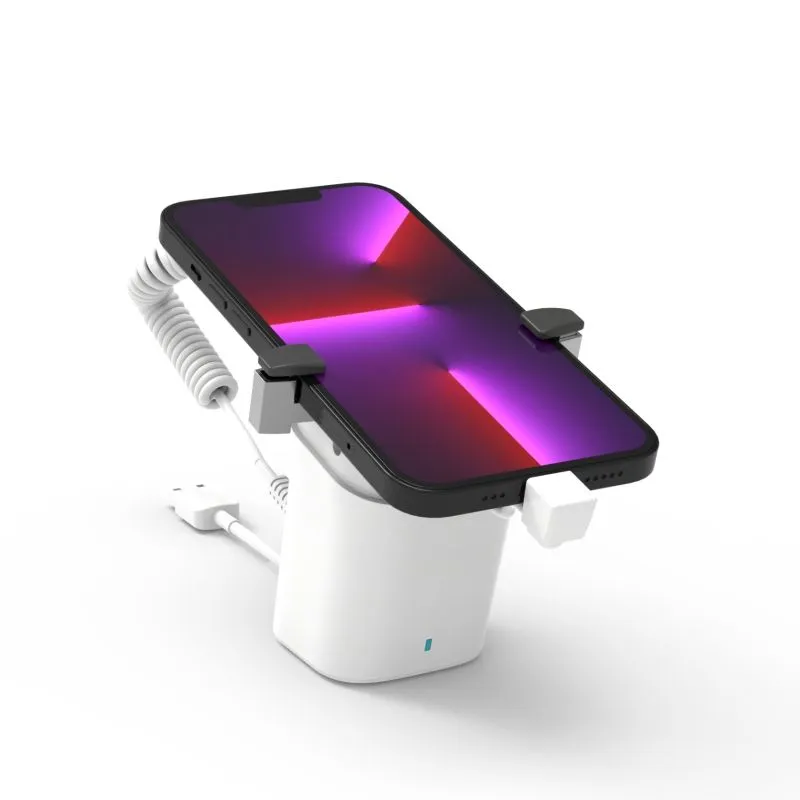
The history of retail security display is a story of gradual innovation punctuated by moments of necessity. Each generation of technology emerged because the previous one no longer met the conflicting demands of security, customer experience, and operational efficiency.
Generation 1: The Glass Cabinet Era
Approximate period: Pre-1990s
For most of retail history, the approach to securing valuable merchandise was simple: put it behind glass.
Locked display cabinets were the standard for jewelry, electronics, cameras, and other high-value items. Customers had to flag down a sales associate, wait for the cabinet to be unlocked, and then — only then — could they see the product up close.
The trade-off was stark:
- Security: Very high
- Customer experience: Poor
- Staff efficiency: Low (constant unlocking/relocking)
- Sales impact: Many customers walked away rather than wait
Generation 2: The Tether Era
Approximate period: 1990s - early 2000s
As electronics retail expanded rapidly, the limitations of glass cabinets became unsustainable. Retailers needed a way to put products in customers' hands without putting them at risk.
The answer was physical tethering — cables, chains, and retractable pull boxes that secured devices to a display surface.
Technology: Mechanical cables with simple locking mechanisms
Key innovation: Customers could pick up and examine products
Weakness: No alarm; cables could be cut; no notification when theft occurred
Generation 3: The Standalone Alarm
Approximate period: Early 2000s - mid 2010s
The next breakthrough added active deterrence. When a device was lifted from its stand or its cable was cut, an audible alarm triggered — typically 85-100dB — drawing immediate attention from store staff and customers.
Technology: Battery-powered alarm units with cable triggers
Key innovation: Active deterrence significantly reduced grab-and-run theft
Weakness: Each unit managed individually; no centralized control; alarm fatigue from false triggers
Generation 4: The Wireless Revolution
Approximate period: Mid 2010s - present
The introduction of 2.4GHz wireless remote control transformed retail security display management. Staff could now:
- Disarm multiple stands from across the floor
- Switch between silent and audible alarm modes
- Receive low-battery alerts for proactive maintenance
Technology: Wireless RF communication between remote and stands
Key innovation: Reduced response time to alarms; enabled multi-unit management
Weakness: Battery management at scale remains a challenge
Generation 5: Centralized Intelligence
Approximate period: Present - emerging
The latest evolution consolidates control further. Rather than each stand having its own complete electronics package, centralized multi-port controllers manage multiple display points from a single unit.
This reduces cost (by sharing control electronics across 4-8 devices), simplifies management (one controller, not 8), and maintains individual device security.
Technology: Multi-port controller + individual alarmed stands
Key innovation: 30-40% cost reduction vs individual units; streamlined operations
What's Next? Generation 6
Looking ahead, several trends are shaping the next generation of retail security display:
IoT Integration
Alarmed stands that report their status to a central monitoring system — not just a nearby remote, but to a cloud dashboard accessible from anywhere. Store managers could see real-time alarm status across all locations from their phone.
Data Analytics
Beyond real-time monitoring: systems that track how often devices are picked up, how long interactions last, which products generate the most engagement. This turns display security from a cost center into a source of retail intelligence.
AI-Assisted Deterrence
Camera integration that detects suspicious behavior patterns and automatically issues verbal warnings or triggers additional security measures — combining physical display security with smart surveillance.
Seamless Omnichannel Integration
ESL (electronic shelf label) systems already allow pricing to be updated from a central dashboard. The next step is integrating pricing, inventory, and security into a single retail operations platform.
What This Means for Retailers Today
If you're evaluating display security now, here's the practical takeaway:
| If your current setup is... | Consider upgrading to... |
|---|---|
| Glass cabinets only | At minimum, standalone alarm stands for your top 5-10 demo devices |
| Mechanical cables/tethers | Alarm-enabled stands — you'll see an immediate drop in theft |
| Standalone alarms (no remote) | Wireless-enabled stands with remote control |
| Wireless stands (per-unit) | Centralized multi-port system for cost savings and simplified management |
You don't need to jump to the latest generation to see improvement. Each generation delivers a meaningful leap in either security, customer experience, or operational efficiency.
Final Thought
The evolution of retail security display mirrors retail itself — a constant balancing act between protection and accessibility. The retailers who get this balance right don't just reduce theft; they create better shopping experiences that drive higher sales.
The technology will keep advancing. But the core principle remains unchanged: the best security is invisible to the honest customer and undeniable to the dishonest one.
About the author: This article was contributed by retail display security specialists with a decade of experience helping retailers evolve their security strategies from basic cabinets to smart, connected systems.
Need a Retail Security Solution?
Get a free consultation and custom recommendation for your store. Factory-direct pricing, global shipping.
Request Free Assessment