
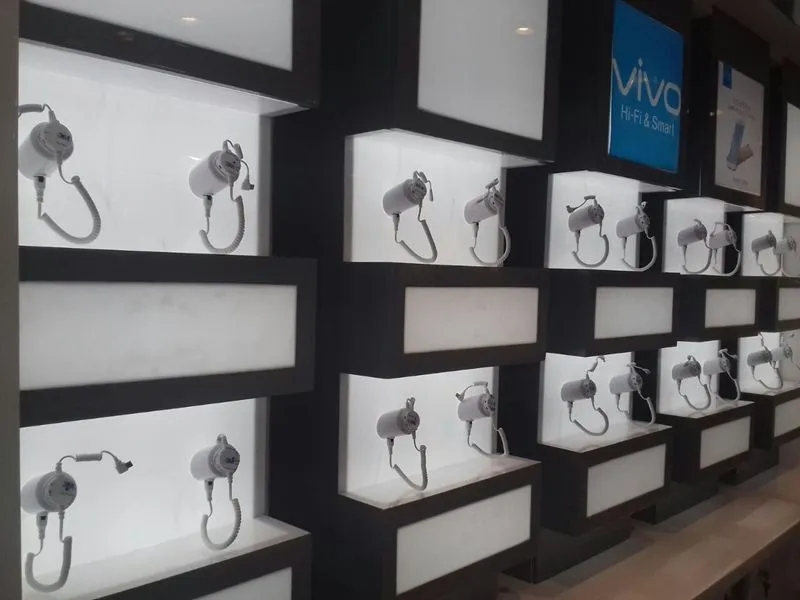
When I talk to retailers in emerging markets — Southeast Asia, Africa, the Middle East, Latin America — the conversation about display security always starts differently than with their counterparts in North America or Europe.
In developed markets, the conversation begins with feature preferences: Do you offer wireless remote control? What's the battery life?
In emerging markets, it starts with fundamentals: Can it survive the heat and humidity? What happens when the power fluctuates? How do I get replacement units when they break?
These aren't secondary concerns. They're the primary reality of operating retail displays in challenging environments. And they demand different solutions.
The Unique Challenges
1. Environmental Stress
| Factor | Impact on Display Security | Emerging Market Reality |
|---|---|---|
| Temperature | Battery life degrades; plastic housings may warp | 35-45°C common in many markets |
| Humidity | Corrosion of contacts and alarm mechanisms | 80-90% RH in tropical climates |
| Dust | Clogs retraction mechanisms, interferes with sensors | Open-store environments in dusty areas |
| Power instability | Damages charging circuits in alarm stands | Frequent brownouts and surges |
Implication: Products designed for climate-controlled North American malls may fail within months in outdoor or semi-outdoor retail environments common in emerging markets.
2. Logistics and After-Sales Support
The biggest frustration we hear from emerging market retailers: I bought 100 stands, 15 failed within 6 months, and shipping them back for warranty costs more than the units themselves.
- **Shipping costs**: Return shipping for warranty claims can exceed the unit cost
- **Lead times**: Replacement parts take 3-6 weeks to arrive
- **Technical support**: Time zone differences + language barriers complicate troubleshooting
Implication: Reliability matters more than features in markets where after-sales support is difficult.
3. Cost Sensitivity
Hardware costs that seem reasonable in USD can be prohibitive when converted to local currencies and adjusted for purchasing power:
| Market | Per-Unit Budget Tolerance | Preferred System |
|---|---|---|
| US / Western Europe | $40-80 | Full-featured wireless alarm stands |
| Southeast Asia | $15-30 | Basic alarm stands or centralized systems |
| Africa / South Asia | $8-20 | Mechanical security or basic alarm stands |
| Middle East | $25-50 | Mid-range with remote control |
Implication: One product line cannot serve all markets. Pricing and features must be adapted to regional economics.
4. Theft Patterns Differ
Theft in emerging markets often follows different patterns:
- **Organized retail crime**: Less common than in US/Europe
- **Opportunistic theft**: More common, especially in crowded market environments
- **Inside job / staff theft**: A significant concern in many markets
- **Bulk theft**: Display arrays stripped quickly in coordinated events
Implication: Alarm stands (audible deterrence) are more effective than complex electronic tracking in most emerging market contexts.
Solutions That Work
For Environmental Resilience
Choose industrial-grade components:
- Extended temperature range batteries (-10°C to 60°C)
- Corrosion-resistant contacts (gold-plated where possible)
- Sealed electronic compartments (IP54 minimum)
- Wide-voltage charging circuits (100-240V, with surge protection)
Simplify where possible:
- Mechanical security (pull boxes, cable locks) has no electronics to fail
- Centralized controllers placed in climate-controlled back rooms protect sensitive electronics
- Fewer connection points = fewer failure points
For Logistics and Support
The spare parts strategy: Order 10-15% extra units as spare pool. When a unit fails, replace from the pool immediately. Batch failed units for periodic return to supplier.
Local partners: Work with a local distributor who stocks inventory and handles first-line support. This adds a markup but transforms the after-sales experience.
Self-service troubleshooting: Provide video-based installation and troubleshooting guides in local languages. This can help staff follow a repeatable troubleshooting process; the effect depends on the product and local support setup.
For Cost Optimization
Centralized multi-port systems are the best solution for cost-sensitive emerging markets:
A single controller managing 8 stands costs ~$50, plus $10 per stand = $130 total for 8 display points ($16.25/point), compared to $30-40/point for individual units.
Tiered deployment: Don't secure every device equally:
- High-value phones/tablets: Alarm stands
- Mid-value devices: Mechanical cables
- Accessories/low-value: No security, accept the risk
For Theft Pattern Adaptation
Audible alarms are essential. In markets where security guards or staff are present on the floor, a 90dB+ alarm triggers immediate response. Wireless remote disarm helps staff respond quickly without physically approaching.
Visual deterrence matters more in markets where retail security is less pervasive. Visible alarm stands, warning stickers, and obvious cable connections deter opportunistic theft more effectively than hidden systems.
Case Example: A Electronics Chain in Southeast Asia
A regional electronics chain with 30 stores across Indonesia and the Philippines faced 8-12% demo unit loss rates. Previous attempts with basic mechanical cables had little impact.
Solution deployed:
- Centralized multi-port controllers (placed in locked back rooms)
- Alarmed stands with 95dB alarms and retractable steel cables
- Wireless remote disarms for each store
- 10% spare pool for rapid replacement
Results after 6 months:
- Demo unit loss rate dropped from 10% to 2%
- Staff response to alarm events: under 30 seconds
- System cost: $18/display point (vs. $45 for comparable individual units)
- Payback period: 4 months from theft reduction alone
The key insight: the solution wasn't the most advanced technology — it was the most appropriate technology for the environment.
Recommendations for Emerging Market Retailers
- **Prioritize reliability over features** — A simple alarm stand that works for 3 years beats a smart stand that fails in 6 months
- **Buy from manufacturers with emerging market experience** — They understand the environmental and logistical challenges
- **Invest in spares from day one** — The 10-15% extra upfront cost avoids months of downtime per failed unit
- **Consider centralized systems** — Lower per-point cost and easier maintenance make them ideal for cost-sensitive markets
- **Test samples in your actual environment** — A stand that works in Shenzhen may fail in Jakarta. Test before committing to volume
- **Build local support capability** — Either through a distributor or by training internal staff on basic troubleshooting
The Bottom Line
Emerging markets aren't simply "smaller versions" of developed retail markets. They have distinct environmental, logistical, and economic realities that demand adapted security solutions.
The manufacturers who recognize this — and build products and support models accordingly — will win these markets. The ones who treat emerging markets as an afterthought and ship the same products they sell in Europe will see high failure rates and unhappy customers.
For retailers in these markets: don't settle for products designed for conditions that don't match yours. Better options exist.
About the author: This article draws on experience deploying retail security display solutions across global markets, with a focus on emerging market adaptations.
Need a Retail Security Solution?
Get a free consultation and custom recommendation for your store. Factory-direct pricing, global shipping.
Request Free Assessment