
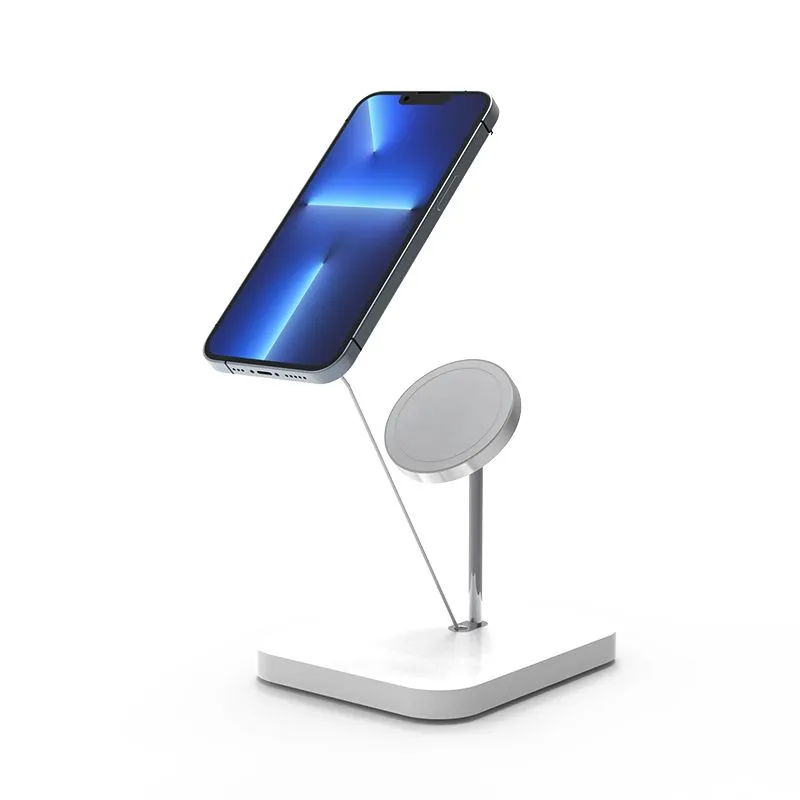
Ten years ago, if you walked into a phone retailer, the security display was unmistakable. Chunky plastic brackets clamped around devices. Thick coiled cables drooping from every handset. The message was clear: these devices are trapped.
Today, walk into an Apple Store. You'll pick up an iPhone, turn it over, scroll through apps — and the security hardware barely registers. A slim puck under the device. Maybe a discreet contact point. Nothing between you and the product.
This isn't just Apple being Apple. It's a deliberate, multi-year shift in how the entire retail security industry thinks about the relationship between protection and presentation. And it has implications for every retailer — not just the ones with white oak tables.
The "Security Through Design" Philosophy
Apple's approach to retail has always been about removal. Remove friction. Remove clutter. Remove anything that doesn't contribute to the product story. When Jony Ive's design team evaluated in-store displays, the security hardware was treated the same way — as visual noise to be eliminated.
This philosophy, which we can call security through design, treats anti-theft hardware not as a necessary evil bolted onto the display, but as an integrated element that should be invisible when not needed and undeniable when triggered.
"The best security is the kind you don't notice — until someone tries to take something they shouldn't."
Three forces converged to make this possible:
1. Apple's Retail Aesthetic Demands Minimalism
Apple Stores are famously minimalist. The wood tables, the open layouts, the absence of signage clutter — every element is curated. Bulky security hardware directly contradicted this design language. Apple's retail design team pushed suppliers to create security solutions that preserved the product-as-hero presentation.
2. Sensor Technology Miniaturized
The electronics that detect device removal have shrunk dramatically. A decade ago, alarm modules required space for a piezoelectric buzzer, a battery compartment, and a mechanical trigger switch — easily the size of a matchbox. Today's modules use MEMS accelerometers smaller than a grain of rice, surface-mount buzzers, and precision magnetic contact sensors that can detect a 0.5mm gap between the device and its base.
3. Wireless Killed the Cable
The coiled security cable — once the defining visual of phone display security — has been replaced by wireless communication. 2.4GHz RF remotes can arm and disarm stands from across the sales floor. Lithium battery efficiency means a single charge can power months of operation. The result: security hardware that sits under the device, not wrapped around it.
What Changed: A Timeline of Weight Loss
| Era | Typical Stand Profile | Key Visual Feature | Alarm Mechanism |
|---|---|---|---|
| 2005-2010 | Chunky plastic bracket + coiled cable | Thick security cable connecting to base | Piezo buzzer in plastic housing |
| 2010-2015 | Slimmer aluminum bracket | Retractable cable (cleaner but still visible) | Integrated alarm in base unit |
| 2015-2020 | Magnetic puck / contact sensor | No visible cable; device sits on sensor | Wireless remote-controlled alarm |
| 2020-present | Ultra-slim base (under 8mm height) | Nearly invisible; device appears to float | Multi-port centralized controller |
The Technology Behind the Thinness
How do you build a security stand that's barely there? Let's look at the engineering.
Precision Magnetic Contact Sensing
Instead of a mechanical latch that physically locks onto the phone, modern lightweight stands use magnetic contact sensors. A small metal plate adheres to the back of the device (or its case). The stand contains a sensor that detects when the magnetic field is broken — meaning the device has been lifted beyond a threshold distance, typically 2-3mm.
This eliminates the need for bulky clamps, brackets, or mechanical arms. The phone simply rests on a flat puck, held by nothing but its own weight. The magnetic sensor silently monitors the connection. If the device is removed without disarming, a 90dB+ alarm triggers instantly.
MEMS Accelerometer Tamper Detection
Micro-electromechanical systems (MEMS) accelerometers — the same technology that tells your phone which way is up — have been adapted for tamper detection. These sensors can distinguish between normal customer handling (tilting, picking up) and aggressive tampering (prying, twisting, cutting). This reduces false alarms while catching real theft attempts.
Centralized Intelligence: Moving the Brains Off-Stage
One of the biggest contributors to the slim-down trend is the shift from per-unit electronics to centralized controllers. In older systems, every individual stand contained its own alarm buzzer, battery, and control circuitry. In a centralized system like the Tocvue S Series, a single controller manages 4-8 display points from a hidden location under the counter.
The stands themselves become passive endpoints — a sensor and a cable, nothing more. This not only shrinks the visible hardware but reduces cost by 30-40% compared to individual alarm units.
Key Insight
The lightweight trend isn't just about making stands thinner — it's about architectural separation: moving intelligence, power, and alarm output away from the display surface to a centralized, hidden location. The visible stand becomes a sensor, not an alarm system.
Apple's Supply Chain Influence
Apple's security display requirements don't just affect Apple Stores. They reshape the entire manufacturing ecosystem.
When Apple specifies a new security stand design, the manufacturers that win those contracts invest in precision tooling, miniaturization R&D, and quality control processes that eventually trickle down to their broader product lines. A factory that learns to build a 5mm-thick magnetic sensor puck for Apple can apply that expertise to create a 7mm version for the general market at a fraction of the development cost.
This is why the lightweight trend has accelerated across the industry over the past three years. The technology that was once exclusive to flagship stores is now available to independent retailers, carrier stores, and electronics chains — often at price points that make the upgrade a no-brainer.
What This Means for Your Store
You don't need an Apple-sized budget to benefit from lightweight security displays. Here's what to consider when evaluating modern options:
Customer Experience Comes First
The business case for lighter security is straightforward: less visible hardware = better product interaction = higher conversion. When customers aren't wrestling with cables or distracted by bulky brackets, they spend more time engaging with the product. Apple's own data suggests that unencumbered product handling increases purchase intent by 15-20%.
Durability Doesn't Have to Mean Bulk
A common concern with lightweight stands is durability. But modern engineering proves otherwise. Aircraft-grade aluminum alloy bases, tempered glass surfaces, and reinforced contact points mean today's slim stands can withstand years of daily retail abuse. The T10 low-profile stand from Tocvue, for example, uses a 6mm aluminum alloy base that's been tested to 100,000+ contact cycles without sensor degradation.
Start Small, Scale Smart
You don't need to retrofit your entire store. Start with your 3-5 highest-value demo devices. Replace their bulky old stands with slim magnetic models. Track engagement and conversion for 60 days. The data will tell you whether to expand.
Centralization Is the Multiplier
If you're displaying 4 or more devices in close proximity, centralized controllers offer the best cost-to-profile ratio. You get the slim visible form factor and lower per-unit cost and simplified staff management — a triple win.
| Store Type | Recommended Setup | Typical Cost per Point | Visual Profile |
|---|---|---|---|
| Flagship / Brand Store | Custom magnetic pucks with centralized control | $40-60 | Nearly invisible |
| Mid-size Electronics Retailer | T10/T30 slim stands with wireless remote | $15-30 | Low profile (under 10mm) |
| Independent Phone Shop | T10 compact stands (standalone alarm) | $8-15 | Compact but visible |
The Next Frontier: Truly Invisible Security
What's coming next? If current trends continue, we're headed toward security that's not just slim, but genuinely invisible:
- Under-table sensors that detect device removal through capacitance changes in the table surface — no hardware touching the device at all.
- Camera-based AI deterrence that monitors customer behavior and triggers verbal alerts before a device is even touched with malicious intent.
- RFID-embedded demo devices that self-report their position — if a device moves beyond the store perimeter, an alarm triggers without any physical tether.
These technologies are still in early deployment, but the direction is clear: the future of retail security is invisible until it's needed.
Final Thought
The lightweight security display trend isn't a fad. It's the logical endpoint of three decades of retail evolution: better sensors, smarter architecture, and a growing understanding that the best product presentation is one where nothing stands between the customer and the product.
Apple led the way because their brand depends on it. But the technology is no longer exclusive. Whether you're running 5 stores or 500, lightweight anti-theft displays are now within reach — and they're likely the single best investment you can make in your in-store customer experience this year.
Looking for Lightweight Security Displays?
Explore our T10 low-profile and T30 square-type stands — engineered for the modern retail aesthetic with Apple Store-grade slimness at accessible price points.
View Products